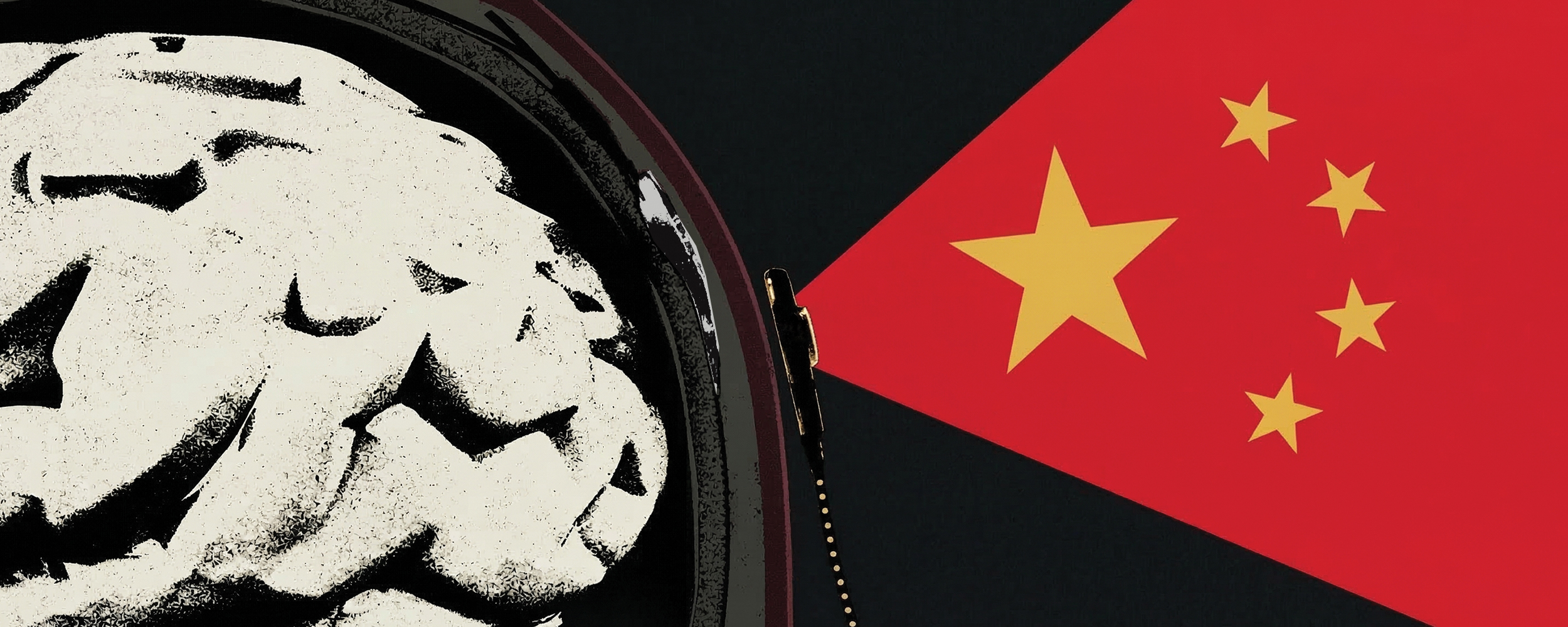
Last week, in a world first, a Brain-Computer Interface got regulatory approval for commercial sale. But this news didn’t come from Silicon Valley. It didn’t come from Australia, the UK, Canada or Europe either. It came from China.
In just nine months, China has issued a national BCI blueprint, overtaken the United States in BCI patent filings, funnelled hundreds of millions into startups, and now granted the first commercial Brain-Computer Interface approval on Earth.
Is the West losing the race to access the brain due to outdated regulatory structures?
In the past 72 hours alone, China’s NMPA cleared Neuracle’s implantable BCI for commercial sale, the first regulator on Earth to do so. Stairmed, a Shanghai startup barely four years old, brought Alibaba Group and Tencent into the BCI sector for the first time with a single $72.5 million strategic round.
In the past two weeks Gestala raised $21.6 million for an ultrasound-based BCI, 2.5 times oversubscribed, and NeuroXess broke ground on China’s first BCI production facility.
No other country on Earth is moving this fast. And no other country has a plan this deliberate.
China’s national BCI strategy, announced in 2025, sets explicit targets: By 2027: breakthroughs in core technologies, internationally competitive electrode, chip, and full-system products, and the emergence of three to five BCI unicorn companies from Beijing alone. By 2030: a mature industry ecosystem anchored by two to three globally dominant firms, positioning China at the front of the global BCI pack.
China has executed precisely this playbook before — in solar panels, in electric vehicles, in 5G, and even in building cities (You can read my article on ‘The Shenzhen Precedent’ here: https://velcodar.substack.com/p/the-shenzhen-precedent-how-chinas)
The playbook is unmistakable: top-down industrial policy, coordinated procurement, insurance integration and aggressive capital injections.
Thanks to China’s “Green Channel” fast-track regulatory approval process, Neuracle received full NMPA market authorisation for its coin-sized wireless implant. This means that any qualified hospital in China can now buy and implant the device.
Neuralink in the US, by comparison, still operates under an FDA investigational device exemption and only with 21 patients so far.
But what makes the approval especially significant is what comes after it: reimbursement. China designated BCI procedures as independently billable medical services in 2025. Hospitals can charge for them and patients can be reimbursed, removing the adoption bottleneck that has stalled medical devices in other markets for years.
The BCI stars of China
Neuracle received NMPA clearance for its implantable BCI system targeting patients with cervical spinal cord injuries. The device decodes motor intent and drives a pneumatic glove for grasping. The company has already begun its IPO tutoring process for a Star Market listing.
StairMed Technology, barely four years old, brought Alibaba and Tencent into the BCI sector for the first time with a single $72.5 million strategic round. Its wireless implant completed its first human implantation in early 2025. The company plans multicenter registration trials targeting forty patients before December this year.
Gestala, backed by Shanda Interactive billionaire Tianqiao Chen 陈天桥, is pursuing phased-array ultrasound rather than electrodes — a non-invasive alternative that sidesteps surgery entirely. Its $21.6 million round was 2.5 times oversubscribed. The first prototype is due before year-end.
NeuroXess, which completed China’s first prospective invasive BCI human trial in 2025, is building a 14,300-square-metre production facility in Jiangxi designed to produce tens of thousands of units.
Every one of these companies has regulatory fast-track status, institutional capital, and clinical enrolment targets measured in dozens of patients per quarter. Policy and product are remarkably aligned.
Shanghai launched the country’s first BCI industry cluster in June 2025. Guangdong is home to eighty BCI companies. All supported by an ambitious and deliberate blueprint.
Meanwhile, in the West
While China builds, the West regulates. But slowly, and in fragments.
Australia has no neurotechnology-specific legislation at all, and BCI does not appear in any current national science or technology strategy.
The United States has no federal neural data law. California, Colorado, and Montana have each passed their own protections; Connecticut’s takes effect in July. But there is no federal floor. The EU AI Act classifies BCIs as high-risk systems but does not name brain data explicitly (it falls under GDPR by inference).
Chile enshrined neurorights in its constitution in 2021, but Chile is not building a BCI industry.
Two Wings and a Military Edge
The China Brain Project, a multi-billion-yuan initiative approved in 2017, is structured as “one body and two wings.” The core body is basic research on the neural mechanisms of cognition. The two wings are treatments for major brain disorders and brain-inspired artificial intelligence.
It is this second wing — AI systems modelled on human cognition — where neuroscience and artificial intelligence converge most powerfully. The Haihe Laboratory at Tianjin University, one of China’s premier BCI research hubs, signed a strategic cooperation agreement with the Academy of Military Sciences in 2024. CEC Brain, a co-founder of that lab, has developed BCI-powered simulation systems for the People’s Liberation Army. Senior government leaders have visited the facility and urged further development to strengthen China’s technological self-reliance.
The civilian and military tracks are not separate and are both developing at full speed.
What the West (and the rest of the world) should do now
The stakes are very high because brain-computer interfaces can potentially open a direct channel to the most important asset any state possesses: the collective mind of its people. The West must move forward with setting the standards, building the infrastructure, and writing the rules that will shape how human potential is accessed, augmented and governed for a very long time.
-
Invest in neurotechnology foresight now. Not in five years or after the next election cycle. Governments and enterprises without dedicated neurotech infrastructure will spend the next decade reacting to China’s moves instead of making their own.
-
Integrate regulation into the innovation pipeline. The Western approach of regulating after the fact, directive by directive, is outdated. China’s NMPA created a “green channel” that fast-tracks BCI devices through regulatory approval. It designed its approval pathway and insurance integration alongside the technology, not in response to it.
-
Build an ecosystem blueprint. BCI touches healthcare, defence, commerce, education and communication. It is a lot more than just one technology. It is a very important infrastructure layer. Map the full landscape. Coordinate across agencies. Public-private partnerships and bodies. Think holistically and in systems.
China is executing. The rest of the world needs to move, fast.